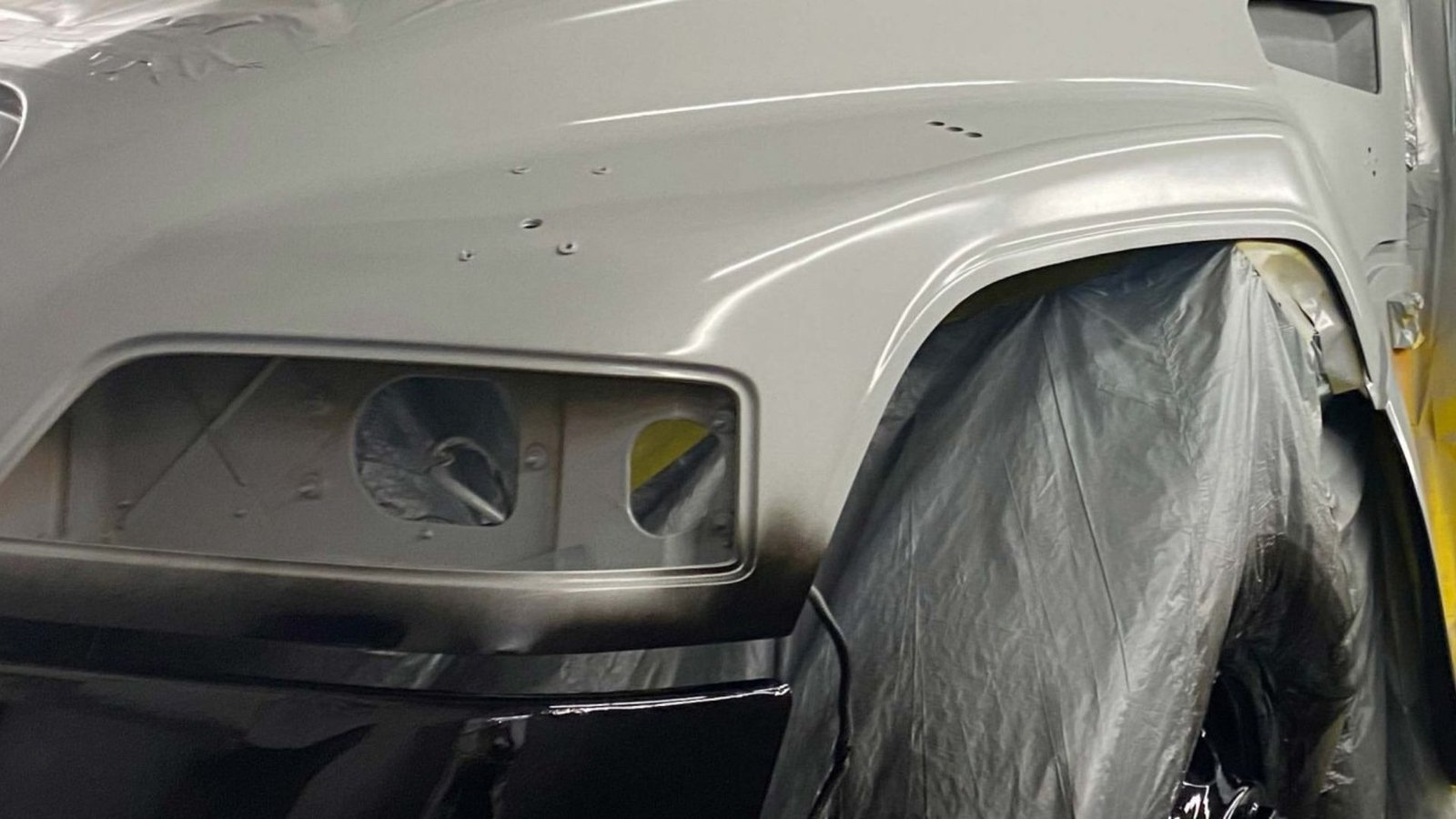
Minor Body Repair Before Refinishing: What Makes the Difference
A refinish that lasts is almost never a refinish done on a compromised substrate. Here's why the body repair work that happens before the paint booth is the work that determines how long the finish will actually hold up.
Paint is usually the part of a refinish that gets talked about, but it's rarely the part that determines how the work ages. A compromised substrate — minor damage that was painted over rather than repaired — is almost always where finishes start to fail before their time. The paint looks fine for a while. Then it doesn't.
This is the reason good refinish shops treat pre-refinish body repair as part of the refinish itself, not as a separate job. The two stages are coupled. The quality of one determines the durability of the other.
What "minor body repair" actually covers
In a refinish context, minor body repair is everything short of structural or frame work. The scope is narrow, but it's deep enough to matter:
- Dent correction — removing small to medium dents that would show through a new finish
- Rust treatment — addressing localized corrosion before it gets sealed under paint
- Panel alignment — fixing gaps and misalignment that make a refinish look sloppy even when the paint work is clean
- Trim and hardware management — removal, protection, and reinstallation of anything attached to the panels being refinished
- Seam sealing — treating body seams that have opened up or lost their sealant
- Substrate correction — filling, feathering, and preparing any repaired area so it blends invisibly
None of this is structural. Structural and frame work belong in a collision shop. But every item on this list, done or skipped, has a direct effect on how the refinished vehicle ages.
Why it matters more than it looks like it should
A dent that gets painted over will still be a dent. A rust spot sealed under new paint will continue to corrode underneath. A misaligned panel will still look misaligned when the clear coat is dry. None of these are surprises — they're just what happens when the body repair stage gets rushed.
What is surprising is how much the lifespan of a finish depends on this stage. Paint systems are designed for a consistent substrate. When the substrate has areas that are absorbing, flexing, or corroding differently than the surrounding metal, the finish above those areas ages differently. You get premature cracking, lifting, and spot failures months or years before the rest of the finish starts showing wear.
Repair vs replace — the actual decision
Not every damaged panel should be repaired. Sometimes replacement is the right call, and a good refinish partner will tell you when. The question is a judgment call based on several factors:
Repair is usually the right call when...
- The damage is cosmetic and the substrate is sound
- Repair cost plus refinish is materially lower than replacement plus refinish
- The panel is non-structural and the damage doesn't affect function
- The repair can be done to a standard that won't show after refinishing
Replacement is usually the right call when...
- The substrate is compromised by corrosion beyond localized repair
- The damage affects structural integrity or function
- Repair cost approaches or exceeds replacement cost
- The damage pattern (multiple small issues across a single panel) would be quicker and cleaner to replace than to fix one item at a time
The important thing is that this decision gets made honestly before work starts, not discovered partway through when the costs start climbing. Shops that front-load this decision are the shops that don't end up with scope creep halfway through the project.
Quality checkpoints that matter
A few specific checkpoints separate body repair done well from body repair done fast. For operators inspecting refinish work, these are the questions to ask or look for:
After dent and panel work
Run your hand over repaired areas. They should feel continuous with the surrounding panel — no ridges, no steps, no areas where you can feel the repair boundary. Visual inspection under angled light should show no filler edges or sanding halos.
Before primer
Any repaired area should be cleaned, de-greased, and ready for primer application. This is the checkpoint where a shop that cares will pause and sign off before moving forward. If the repair stage isn't signed off, the stages downstream are building on an unknown foundation.
Before topcoat
Primer should be smooth and uniform across repaired areas. Any defects in the primer layer will show through the topcoat eventually. This is the last point at which correction is inexpensive.
The practical takeaway
For fleet operators, the useful thing to know about pre-refinish body repair is that it's not optional. You can skip it, but the finish won't last as long as it should, and the savings you booked on the quote will come back as earlier rework.
A refinish quote that treats body repair as a line item separate from the paint work is a quote you can evaluate clearly. A refinish quote that rolls everything together without describing the repair scope is a quote you can't really compare. If you're evaluating shops, ask specifically about how they handle the pre-paint stage. The answer will tell you a lot about the work you'll actually receive.
Have a refinishing project that could use this thinking?
We work with commercial operators across Toronto and the GTA. Tell us what you're running and we'll walk through it with you.